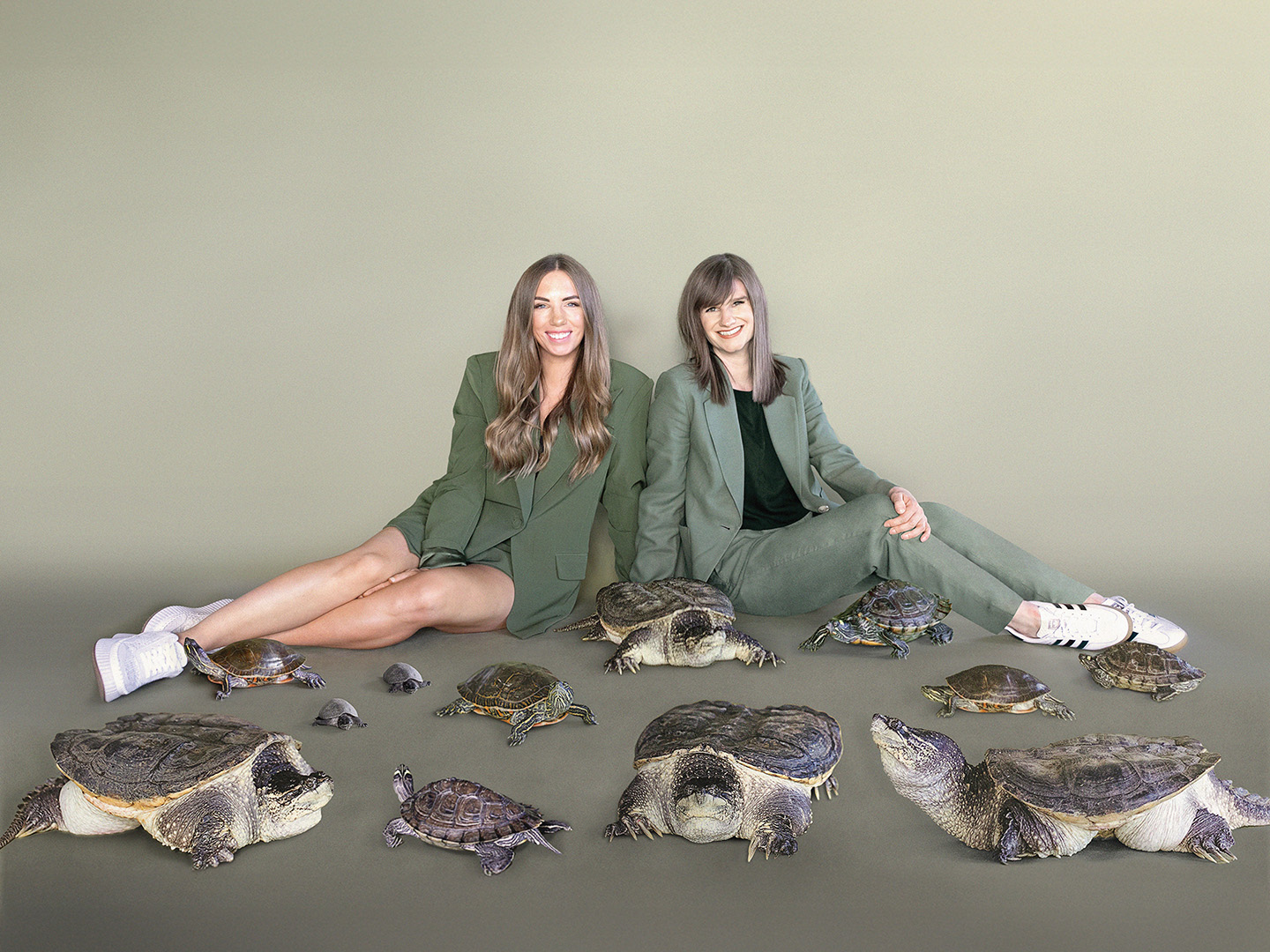
Kelly Olson and Katie O’Halloran. Photos: Clare Aaker of Madeira Creative
A turtle tracking app protects Plymouth’s slow and steady residents.
When Kelly Olson moved from downtown Minneapolis to Plymouth a few years ago, she expected quieter streets, more green space and the occasional backyard visitor. She did not expect dozens of brown, green and plodding reptilian neighbors.
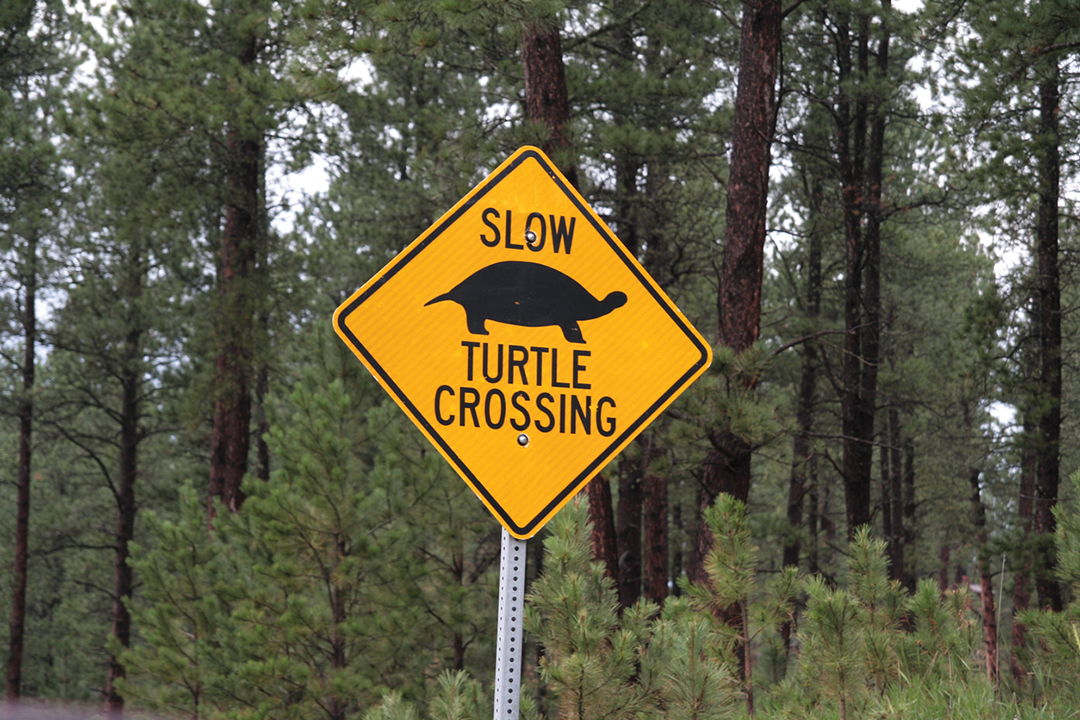
“Every time I walked outside in the spring or summer, I would come across turtles,” Olson says. Her new home sat at the intersection of two large wetlands, and she observed multiple vehicle-vs.-turtle accidents on neighborhood streets. She started doing turtle “sweeps,” walking around her block and gently moving roadside turtles farther away from traffic. But then she witnessed two large adult turtles struck by cars within minutes of each other. They ultimately didn’t make it.
Olson’s response was immediate and decidedly grassroots. She printed signs, posted on Nextdoor and reached out to Plymouth officials. Within 24 hours, city staff from the parks and forestry departments were contacting her. They helped get DNR turtle signs installed throughout the neighborhood. Olson knew her fellow Plymouth citizens were eager to help, but there wasn’t a clear path. She calls it a “difference-making deficit—when people feel the problem is too big, what can they really do to help?” she says.
iStock/silviacozzi
Enter TurtlTracker, the free app she and her sister, Katie O’Halloran, are now building to turn everyday turtle sightings into real conservation data. O’Halloran, an AI engineer currently based in Texas, took the lead on development. “We did a very small, private beta version of the app last summer, and we were able to get some good feedback,” O’Halloran says. They’ve worked on updates since then and are expecting to release a more available beta version this spring.
After downloading the app, TurtlTracker users upload photos and location data when they spot a turtle on or near the road. Some gamified elements, like a leaderboard that tracks who logs the most turtles, make data entry fun. Users can name “their” turtles and compete with friends to see who has the most sightings in a week.
Olson and O’Halloran have worked with ecology and turtle experts to ensure safety and accuracy. “Something that’s unique about our app is that [our audience] is the conservation novice,” Olson says. “We want the community to have the opportunity to enter the conservation space and contribute data that makes a difference.” They also focus on privacy and protection for turtles—for example, no turtle data is made public on the app; common and endangered species data is only shared with verified conservation partners.
As spring approaches, Plymouth residents can expect an uptick in turtle activity, including common local species like painted and snapping turtles. Heads-up! “We’ll start to see a surge of hatchlings crossing the road in May,” Olson says.
To get involved with TurtlTracker, visit the website to sign up for the latest test version of the app, learn more about other ways to help with turtle conservation in your area or make a donation.
TurtlTracker
Instagram: @turtltracker






![“The design inspiration came from artist Briana Auel’s piece [Concrete Jungle//Glass Ceiling]—its modern lines, vintage gold frames and palette of greens, pinks, and blues set the tone for the entire room,” Andrea Soule says. “To layer in fun, I painted the fireplace in Breakfast Room by Farrow & Ball, displayed art we’ve collected over the years and incorporated antique pieces inherited from Chase’s grandmother [Anne Hull].” Her father, Charles Soule, created the stained-glass entrance to the room, partnering with Down Home Stained Glass in Anoka.](https://plymouthmag.com/wp-content/uploads/2026/03/AndreaHeadshots-61.jpg)