Photos: Chris Emeott
Samarkand Restaurant brings the flavors of Uzbekistan to Minnesota.
It isn’t every day that you see traditional tandoor bread sharing a menu with Ukrainian borscht. It certainly isn’t common to have a venue that hosts live Russian music on the weekends also identified as a hotspot for Uyghur cuisine. Samarkand Restaurant in Plymouth reflects the cultural vibrancy of the city in Uzbekistan it’s named after, which served as a significant link and prosperous trading hub along the Silk Road for centuries.
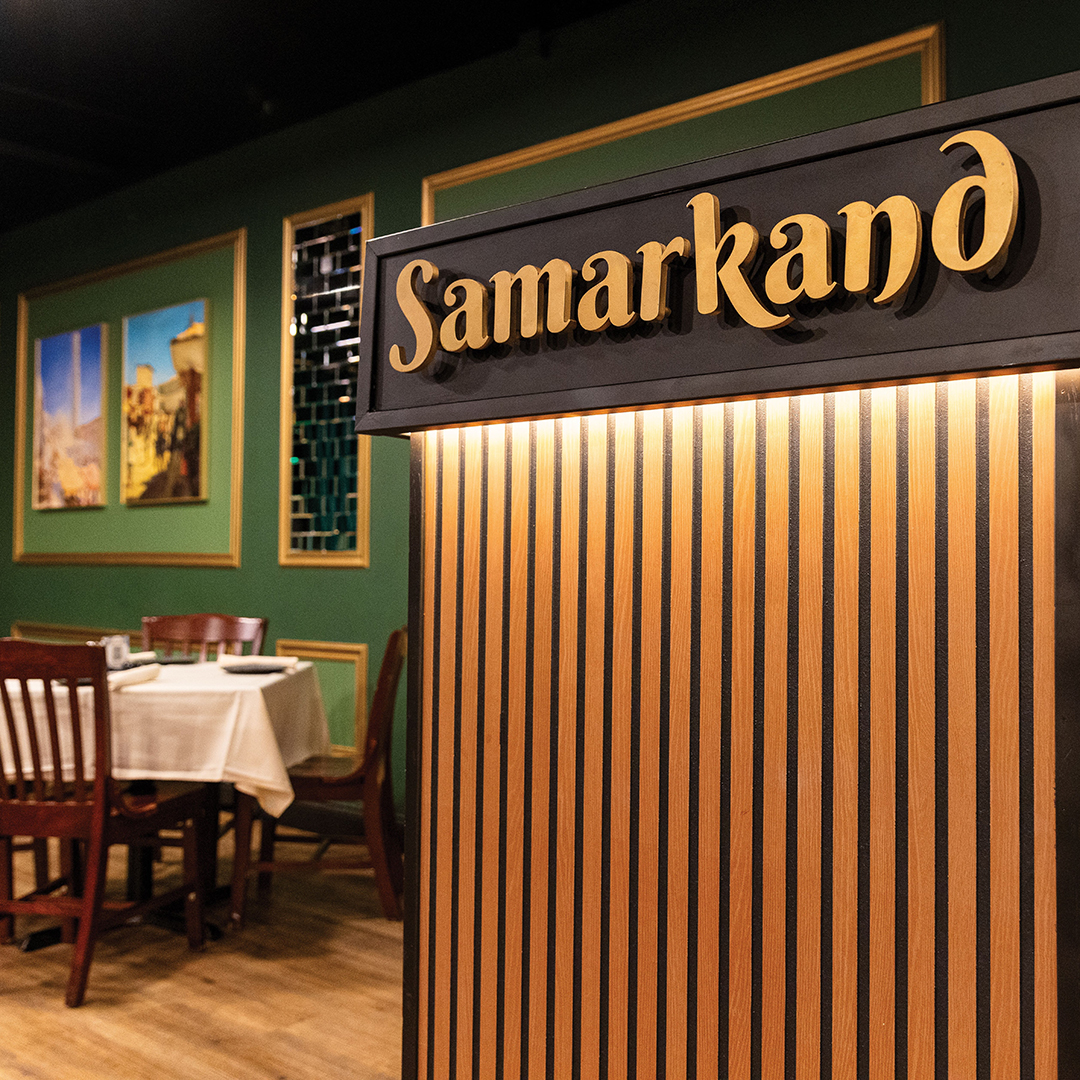
Named after the Uzbek city that served as a significant link on the Silk Road, Samarkand Restaurant reflects a vibrant mélange of cultures and cuisines.
“It is a very hearty and meat-filled cuisine,” says Samarkand co-owner Aziz Radjabov. As a former republic of the Soviet Union, “[Uzbek] cuisine was quite popular and still is quite popular throughout that region,” he says. Samarkand welcomes diaspora communities from Russia and Ukraine as well as neighboring countries Kazakhstan, Kyrgyzstan and Turkmenistan. “They all come to our restaurant because we do share quite a bit of the items from each other’s cuisines,” Radjabov says. As the only Uzbek restaurant in Minnesota, Samarkand also attracts visitors from neighboring states and even Canada—diners looking for a familiar taste of home.
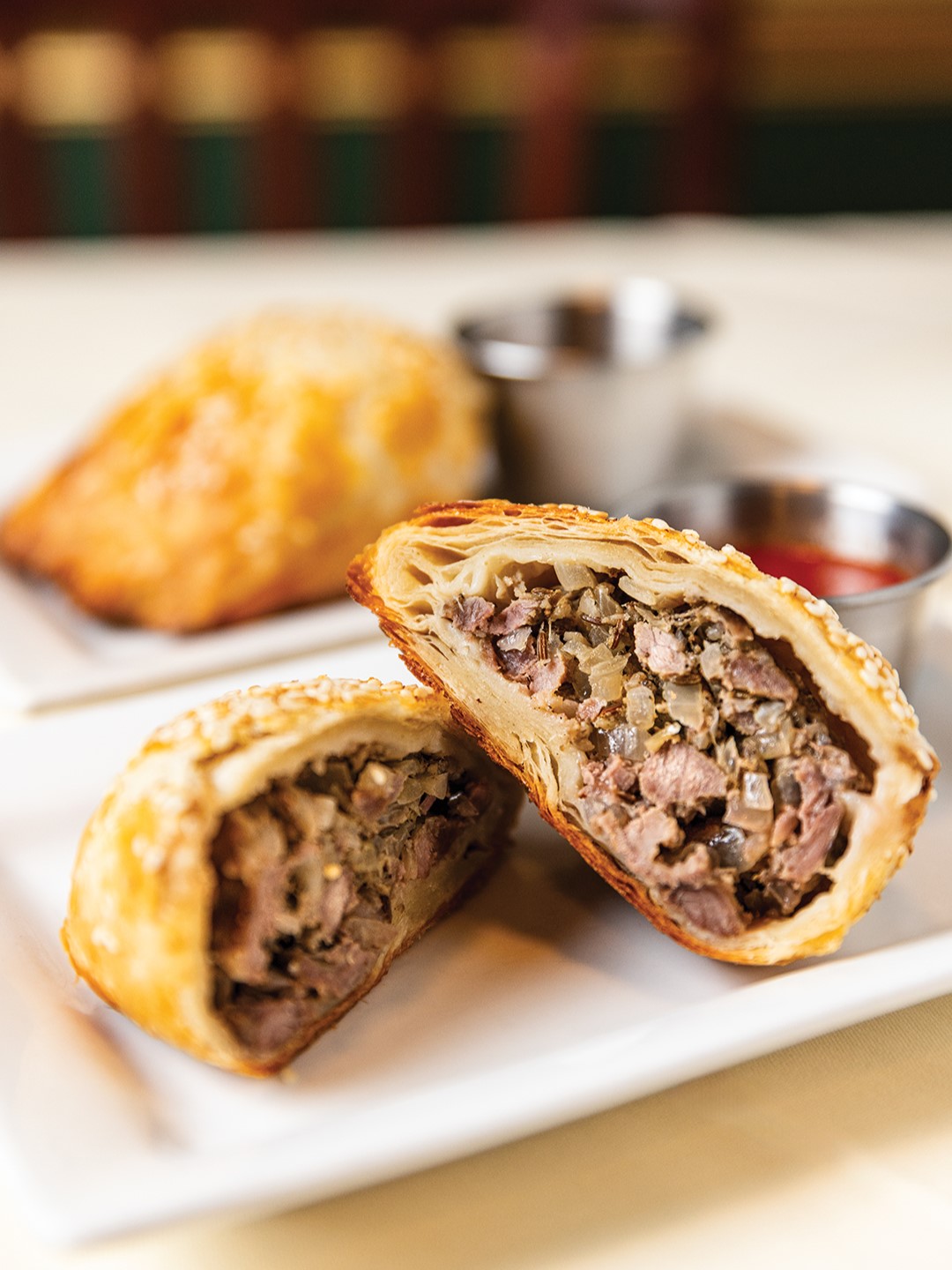
Samarkand Restaurant’s Samsas feature a shell of flaky pastry dough filled with a savory mixture of ground beef and lamb, coriander, cumin and onion.
Radjabov and his uncle, Jafar Muminov, opened Samarkand in 2019, and it’s continued to be a family affair. “My other uncle [Erkin Akhmedov], he’s been a chef all of his life, so all of the recipes came from him, and they are true to what you would find in Samarkand, Uzbekistan,” he says. When the restaurant first opened, his mother and aunts worked in the kitchen; his brother and cousin continue to work the dining room to this day. Since 2024, the family has also acquired the neighboring Russian grocery store, which caters to Eastern European shoppers as Samarkand Market while also offering some specifically Uzbek ingredients.
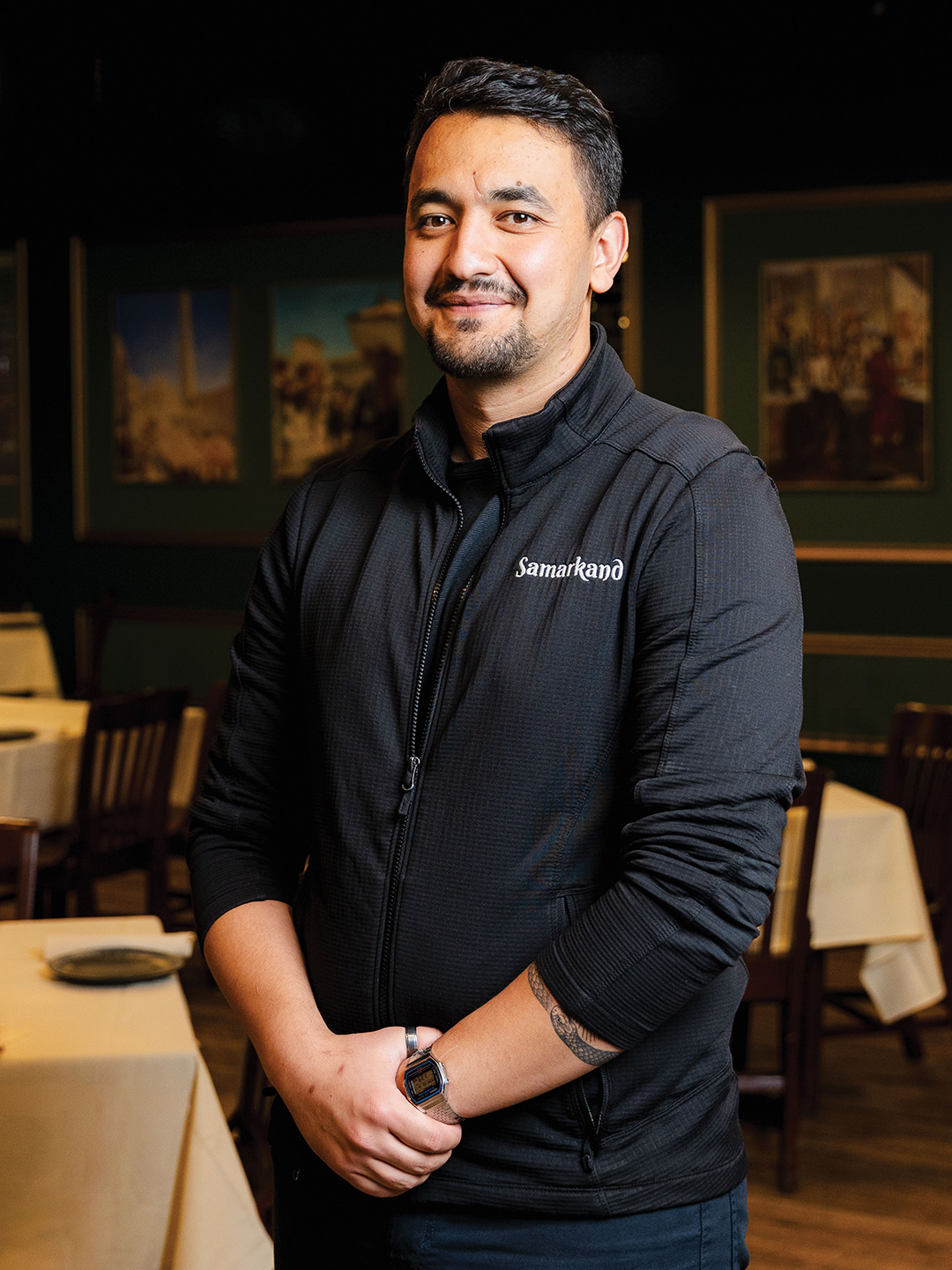
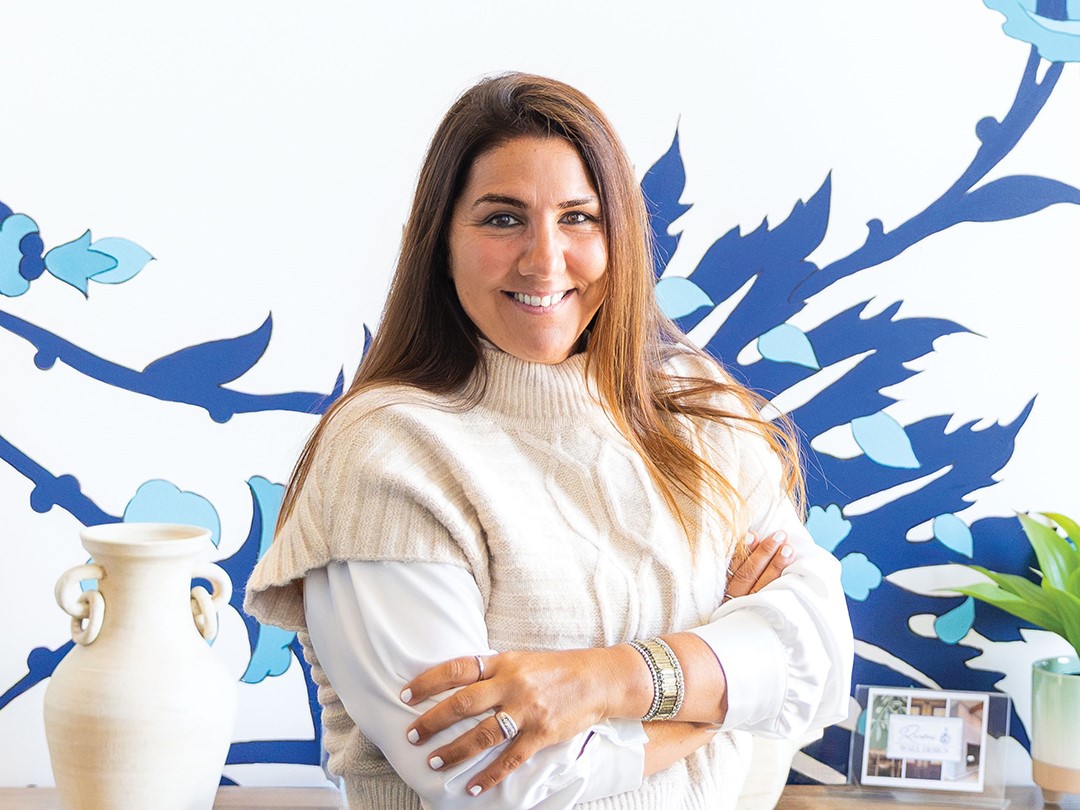
Since opening, Samarkand Restaurant has continued to be a family affair. Aziz Radjabov (above) co-owns the restaurant with his uncle, Jafar Muminov.
To help us understand the cultural melting pot that constitutes Uzbek cuisine, we asked Radjabov to build a menu glossary for some of Samarkand’s most popular items.
First Course
Samarkand serves up two varieties of dumplings that are common among Silk Road cultures. Chuchvara are small, handmade beef and onion dumplings in a vegetable broth, similar to Russian Pelmeni dumplings. Mantu are larger, steamed dumplings also filled with beef and onion. The appetizer is a newer favorite, Radjabov says.
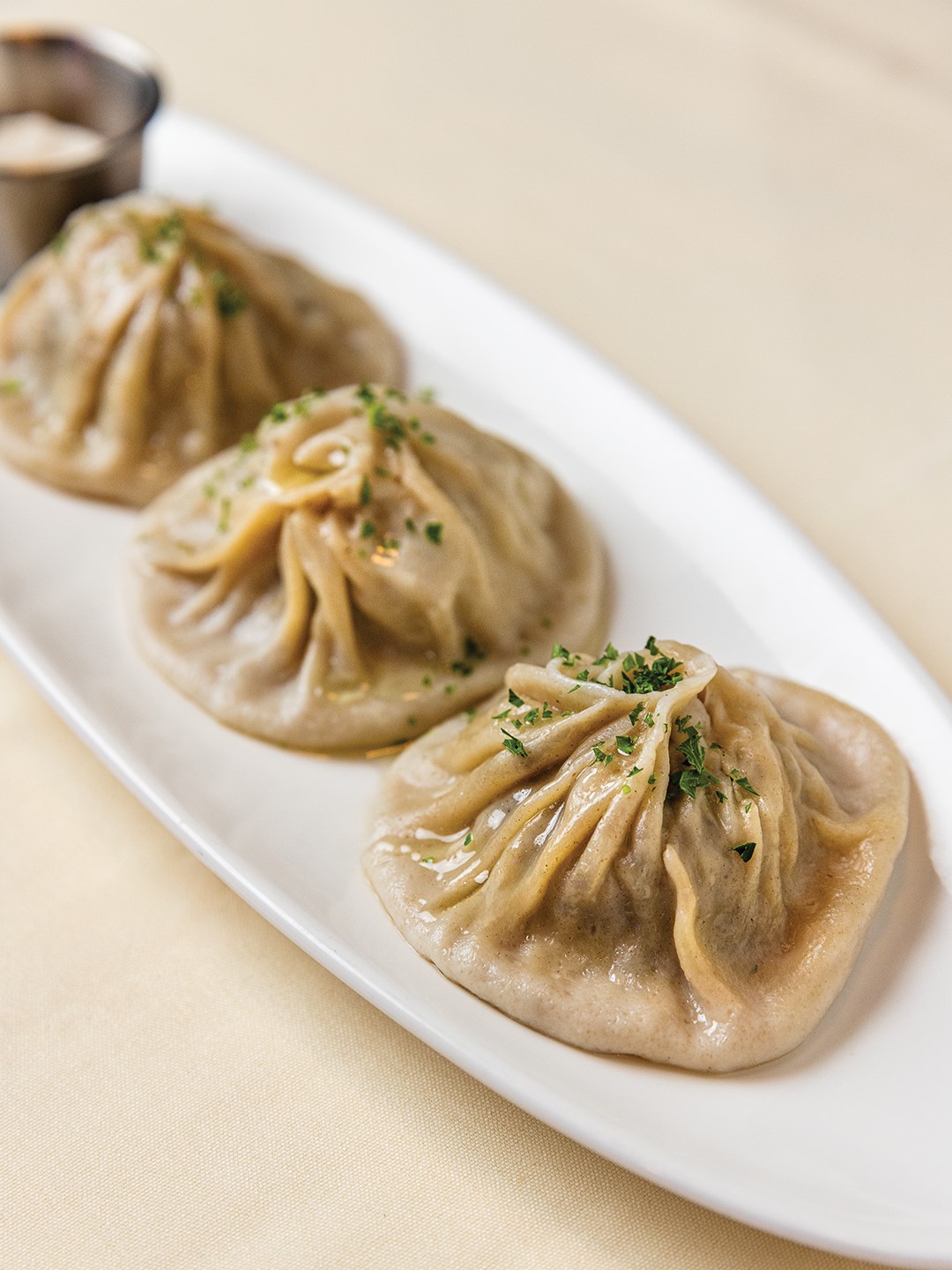
Mantu are large, steamed buns filled with beef and onions.
Samsas, similar to their Indian counterpart samosas, are savory pastry buns filled with a mix of meat and vegetables. “I am very proud of our samsas,” Radjabov says, noting that they’re baked in the restaurant’s tandoor clay oven. He likens the dough, which is handmade from scratch, to that of a croissant—layered and flaky. The filling includes a ground beef and lamb mix accompanied by coriander, cumin and onion. Radjabov says it’s his favorite dish on the menu. “I can survive [soley] on it,” he says.
Main Course
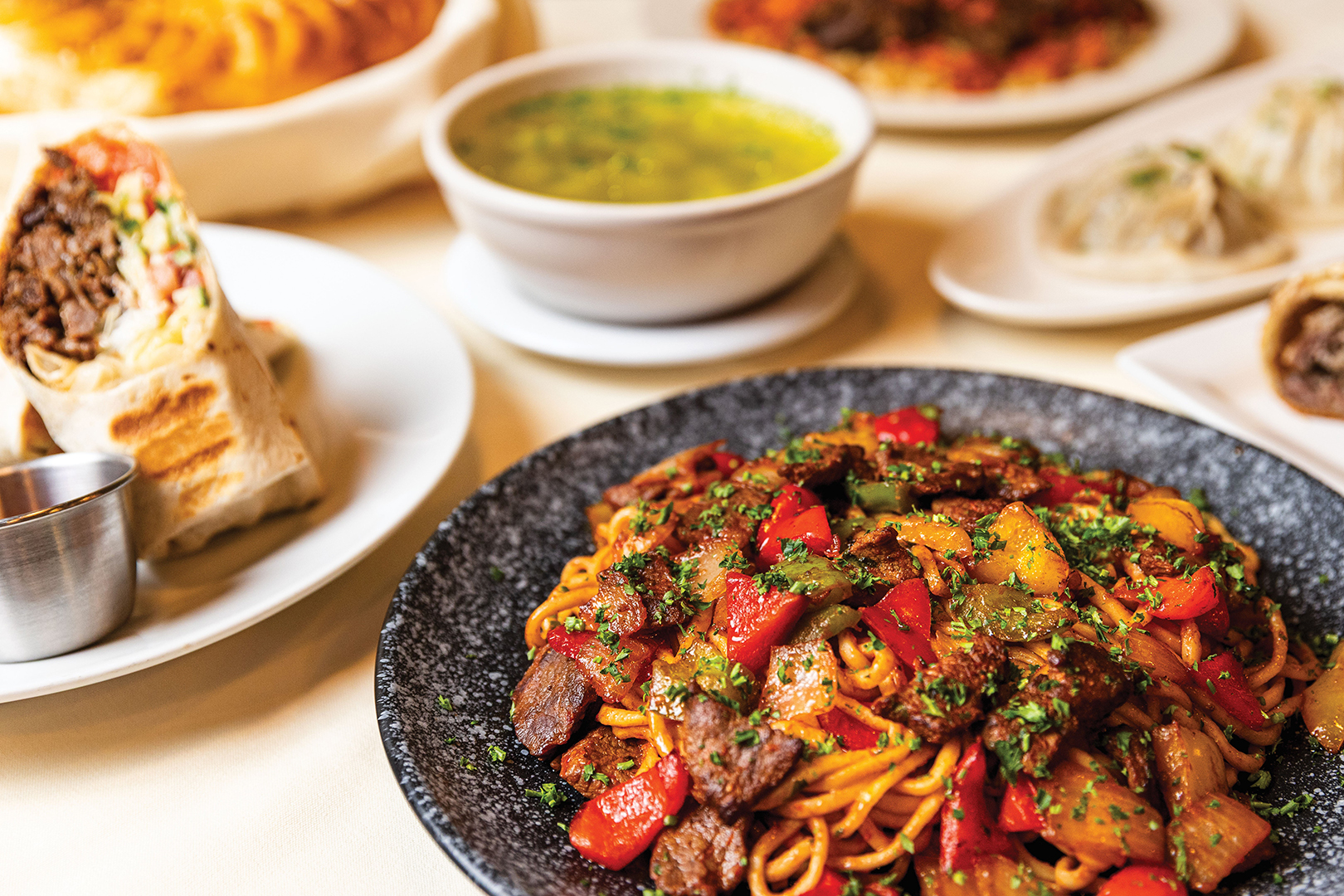
Lagman is another popular dish in Uzbekistan, and it traces its origins back to the Uyghur region of China. Handpulled noodles join cabbage, daikon, peppers and an assortment of other vegetables and spices in a bone broth for this soup. “It is really nice and has a little bit of kick, and we serve it with ajika [chili paste], which makes it even more spicy,” Radjabov says, noting it’s a great cold weather pick. Its stir fried equivalent, Qovurma Lagman, is also popular among the local Chinese community due to its authenticity.
Plov, the national dish of Uzbekistan, is a rice pilaf that includes beef and carrots cooked over the course of three to four hours. Rather than mixing the components together, Radjabov says there’s a particular way of incrementally frying, boiling and steaming the ingredients in the same pot. “It’s quite tricky, but that’s how it’s been done throughout the ages for us,” he says. “It’s very filling, and usually I would recommend for people to try it for lunchtime.”
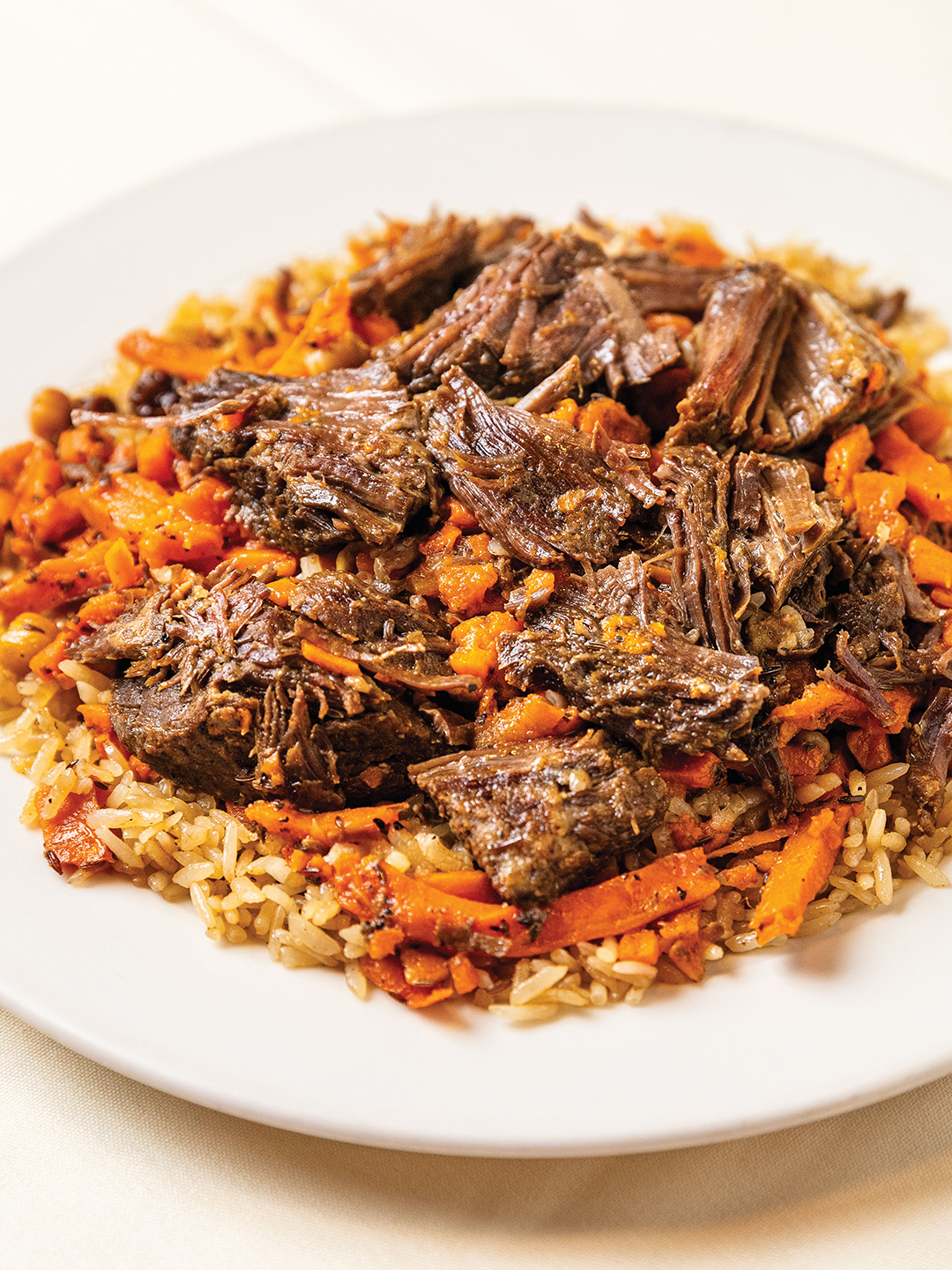
Plov is the national dish of Uzbekistan and consists of beef, carrots and a rice pilaf.
Final Course
For dessert, Radjabov says that Uzbek cuisine doesn’t emphasize sweets, and Samarkand’s cakes come by way of Russia. He identifies Medovik as his favorite. The cake features honey-infused layers and custard cream, with Spartak being its chocolate variant. Pahlava, a traditional Uzbek dessert, sounds similar to Baklava but differs slightly in look and taste. Served warm, the treat consists of layers of pastry dough and walnuts.
Samarkand Restaurant
Instagram: @_samarkand_restaurant_