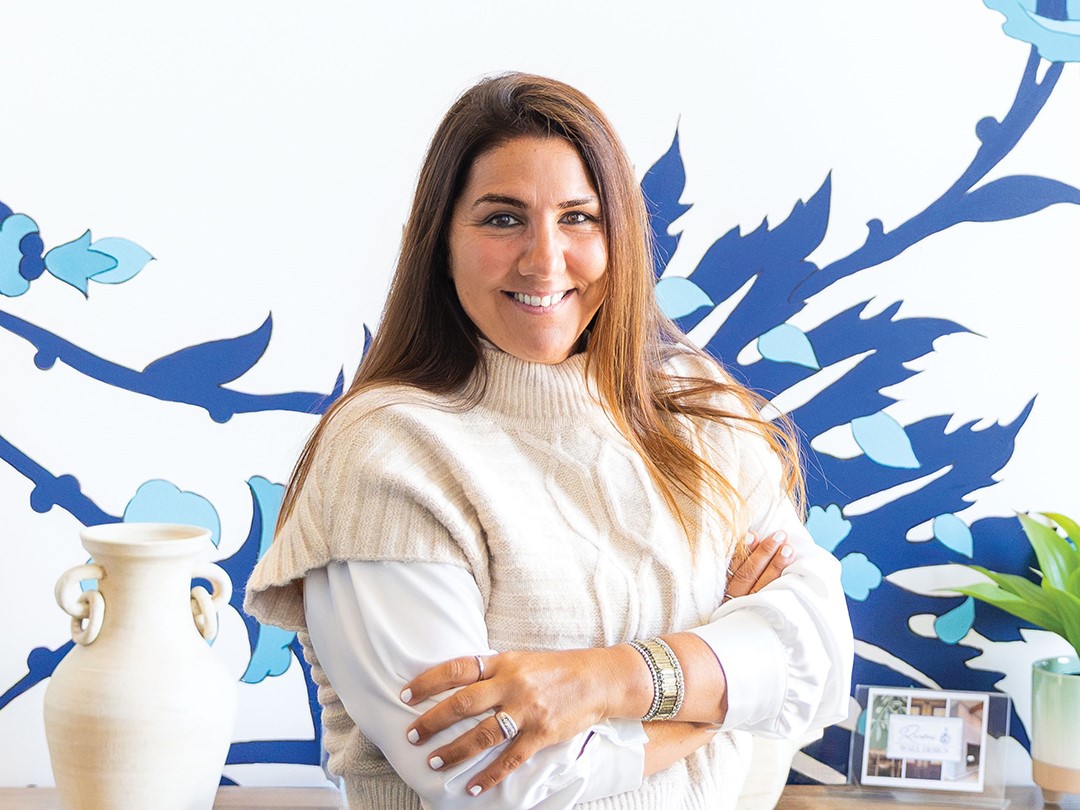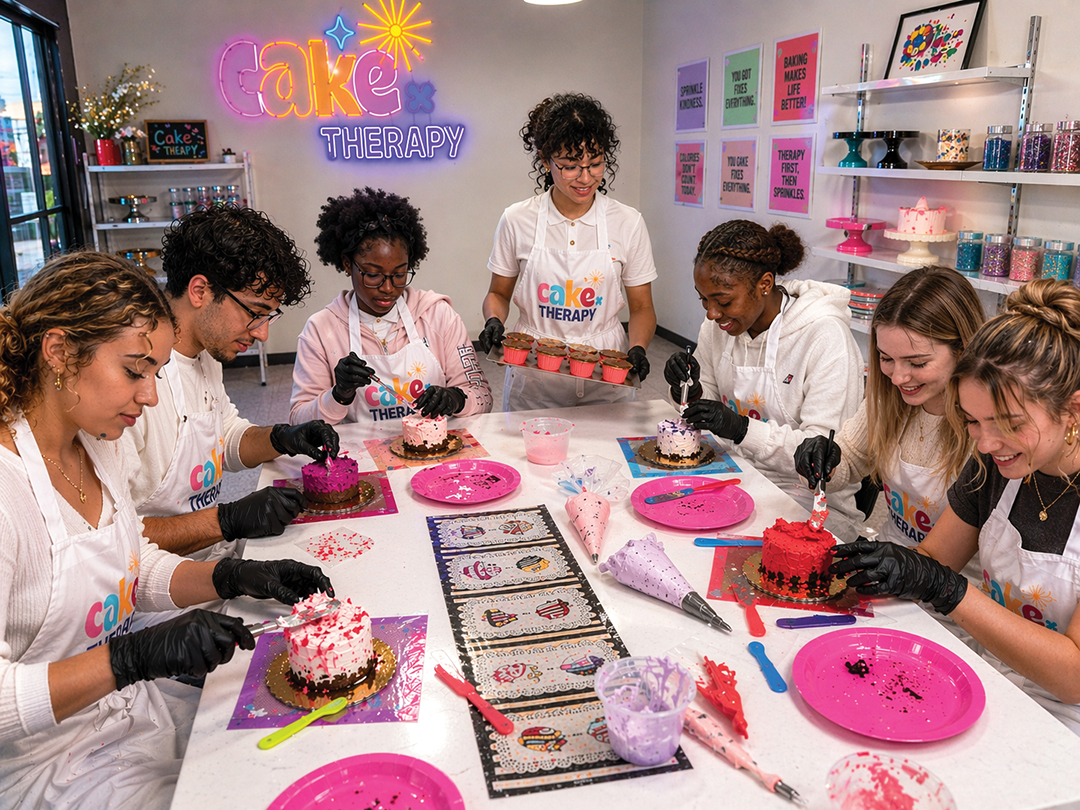
Altreisha Foster’s Cake Therapy Foundation creates a safe place for participants to be themselves and express their creativity. Photos: Cake Therapy Foundation
Creative workshops help girls navigate challenges and discover their strengths.
Some of life’s most meaningful moments come from giving others the support you once needed. For Altreisha Foster, that belief became the inspiration for the Cake Therapy Foundation, an organization that helps
girls face adversity through the creative process of baking.
Based in Plymouth, the nonprofit began in 2019—one year after Foster opened her Sugarspoon Desserts bakery—as a therapeutic modality for girls from underserved communities. The inspiration behind the organization is deeply personal to her. While pregnant with her daughter, she reflected on her own difficult upbringing. Foster wanted to provide an opportunity for young girls that she could have benefitted from when she was their age.
Although she now owns a bakery, Foster didn’t start baking until she was pregnant with her second child. (Her background is in vaccine science and public health.) Foster still leads her public health consulting firm, but she believes the work she does through the Cake Therapy Foundation is her purpose. “Not just the baking, though, but the art of it and how it supports your mental health and your well-being,” Foster says. “I was successful in my work, and I was doing great things, but then I baked and realized that the success of baking opened me up to the world.”
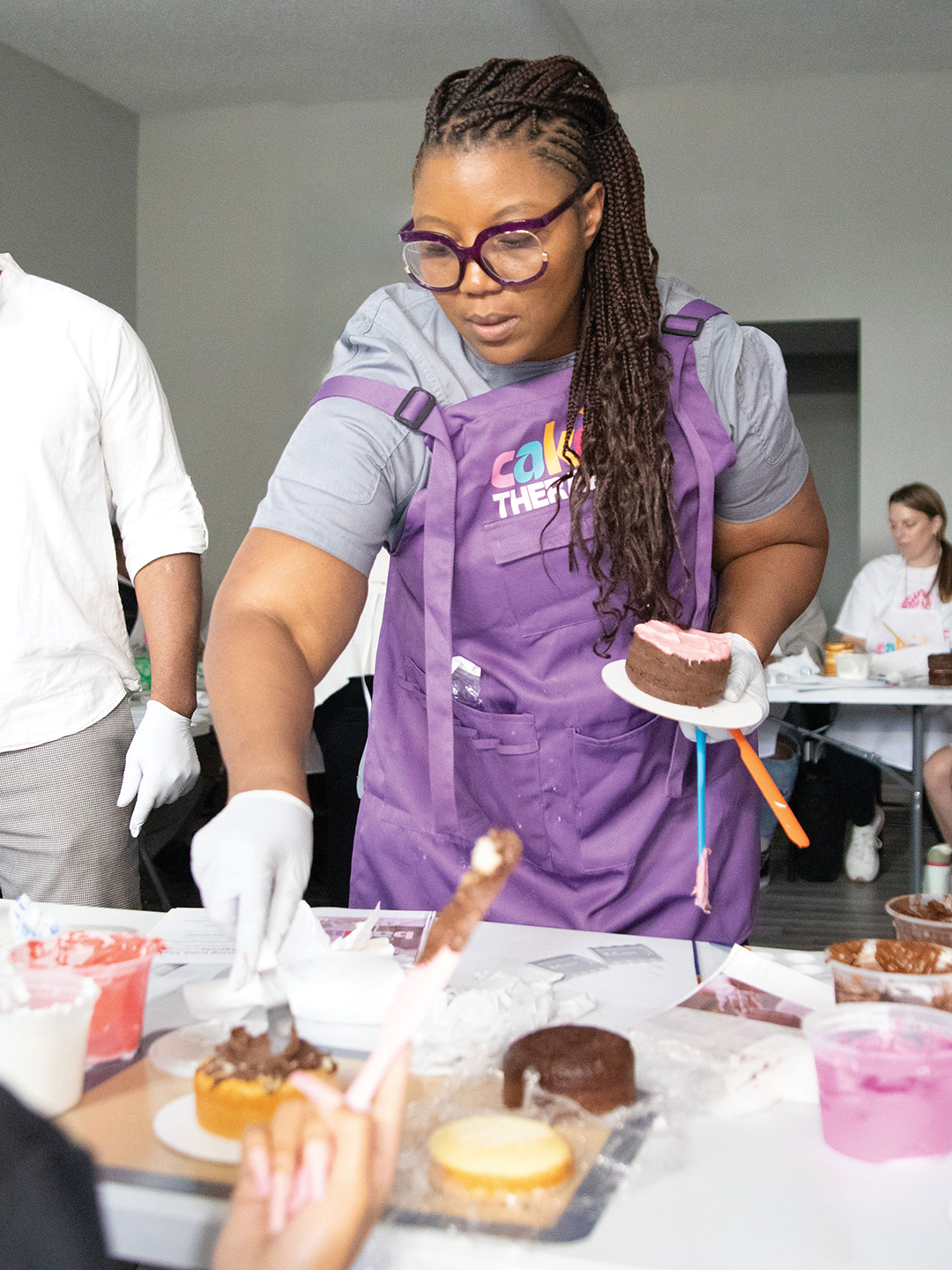
Altreisha Foster likens the process of baking to that of healing: you can’t skip a step; it takes patience.
The foundation doesn’t just teach girls how to bake; life lessons and self-confidence are woven throughout the programming, likened to the steps of baking. “The kitchen ultimately becomes a mirror of sorts,” Foster says. “I’m teaching patience and process. You can’t rush a cake, just like your own personal healing growth takes time. I focus on not skipping a step [and] that your project doesn’t have to look like someone else’s. Because if you skip a step, in all of this, the outcome actually changes.”
Foster brings Cake Therapy directly to the girls it serves. By renting a studio space, partnering with other nonprofits or going into schools, Foster welcomes girls into a space that’s safe to be themselves—and to talk. “The thing about Cake Therapy is it’s very unassuming,” Foster says. “You’re just baking, but then I’m facilitating this conversation, and they are just so relaxed in this space that they start talking.”
The program isn’t just a one-time experience for all of its participants. Although Foster has welcomed around 300 students throughout the history of the foundation, she sees around 60 in long-term programs that meet weekly. The impact is evident through her direct interaction with the girls and with the surveys she conducts after each program. Foster has found that over 70 percent of the girls think their communication skills with their mothers and friends have improved. “That’s why I keep doing it,” she says. “There are girls who I see [who] will tell me that this is the best part of their day. They are waiting on this.”
This fall, Cake Therapy Foundation is publishing its inaugural scientific journal, The Cake Therapy Journal of Therapeutic Kitchens & Youth Well-Being. Submissions were open to community leaders, clinicians, educators and students for papers and notes to the editor on topics including community healing, mental health, therapeutic kitchens, youth well-being and wellness for women and girls.
Cake Therapy Foundation
Instagram: @caketherapyfoundation